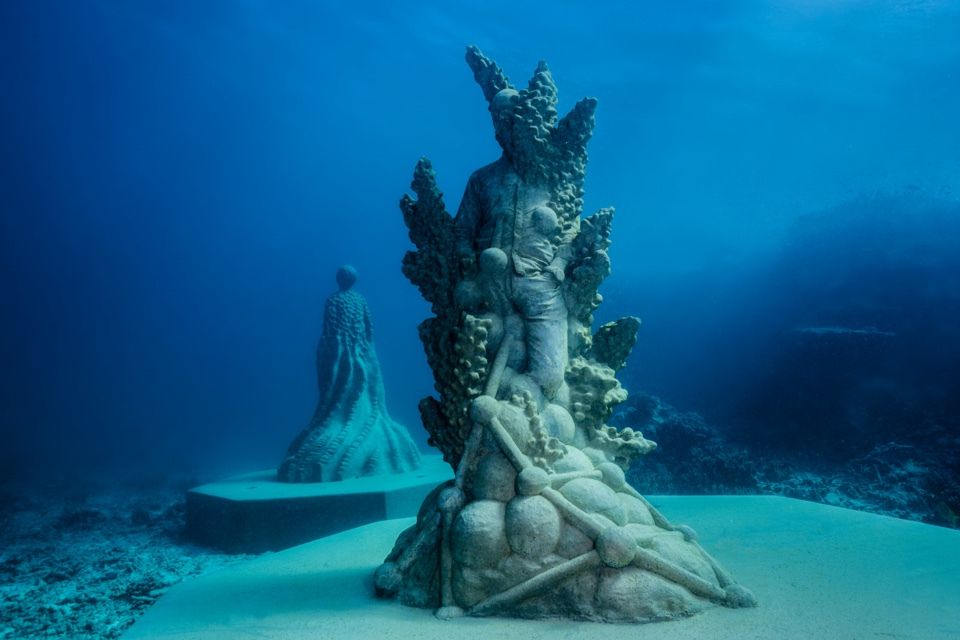
La collection "Towards a Blue Art History" [Vers une histoire de l'art bleue] réunit des contributions de chercheuses et de chercheurs qui s'intéressent à la manière dont les oeuvres d'art et la culture visuelle peuvent modifier nos façons de voir, de s'engager et de s'organiser en relation à l'océan.
Animée par les chercheuses en humanités océaniques Juliette Bessette (Université de Lausanne) et Margaret Cohen (Stanford University), elle est ouverte aux propositions de contribution issues de toutes les disciplines, à condition de porter une attention soutenue aux oeuvres d'art et d'en faire le support central du propos.
La plateforme, hébergée par le Stanford Humanities Center, pourra publier des contributions sans date de clôture. Les formats sont libres et à définir ensemble (texte, capsule vidéo, entretien, etc.). Pour proposer une idée de contribution (maximum 500 mots), merci d'écrire à :
https://shc.stanford.edu/arcade/colloquies/towards-blue-art-history
—
Texte de présentation sur la plateforme :
The visual arts hold a privileged position in exploring human connections to the ocean. Across history, they have expressed ocean emotions and ocean knowledge. In the modern and contemporary periods, they have been associated with its scientific, popular, poetic, mythical, and political approaches. Increasingly, visual studies scholars are surfacing the connections among human practice, the imagination, and the environment to reveal the power of the image, in all its forms, to probe and expand the human relationship with the seas.
This Colloquy assesses the importance and critical role of visual studies within the field of blue humanities, or ocean humanities. It originated from the interdisciplinary symposium "A Blue Art History" (Marseille, France, 2024, organized by Juliette Bessette, with Margaret Cohen as keynote speaker). Bringing together insights from ocean sciences and the humanities, as well as from art historians, artists, and museum professionals, it highlights key issues through which art has shaped conceptions of the ocean across different periods and contexts, as well as specific oceanic modes of understanding the world. These issues include the porous boundaries between artistic and scientific representations of the sea, the emotions and ethics of fishing, and the cultural significance of the marine environment and its biodiversity, whether shown in conventional art venues or visited in underwater installations.
The Colloquy welcomes new contributions that devote sustained attention to visual culture in the broadest sense, ranging from still-life painting, underwater photography and sculpture, and artistic assemblage, to film, drawing, and more. It seeks to explore the ways we see, engage with, and organize ourselves in relation to the ocean through the arts.
At a time when the ocean is in the spotlight both for a renewed attention to marine life and biodiversity and for its role in regulating the Earth's climate, these questions also intertwine with contemporary debates on ocean conservation.