Fabula, la recherche en littérature (actu)

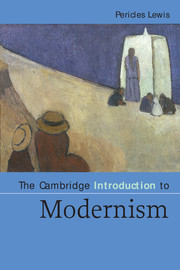
The Cambridge Introduction to Modernism,Pericles Lewis (dir.)

Parution livre (collectif)

Information publiée le jeudi 10 janvier 2008 par Mahigan Lepage


_blank

LEWIS, Pericles [dir.], The Cambridge Introduction to ModernismCambridge, Cambridge University Press, 2007, 298 p.

More than a century after its beginnings, modernism still has the power to shock, alienate or challenge readers. Modernist art and literature remain thought of as complex and difficult. This introduction explains in a readable, lively style how modernism emerged, how it is defined, and how it developed in different forms and genres. Pericles Lewis offers students a survey of literature and art in England, Ireland and Europe at the beginning of the twentieth century. He also provides an overview of critical thought on modernism and its continuing influence on the arts today, reflecting the interests of current scholarship in the social and cultural contexts of modernism. The comparative perspective on Anglo-American and European modernism shows how European movements have influenced the development of English-language modernism. Illustrated with works of art and featuring suggestions for further study, this is the ideal introduction to understanding and enjoying modernist literature and art.

• An overview of modernism and its most important authors and texts • Accessibly written, assumes no prior knowledge and covers everything a student needs to know • Includes further reading suggestions to help students find their way in the field

Contents Preface

Introduction

Part I. Origins:

1. Trials of modernity

2. Primitivists and modernizers

3. The avant-garde and High modernism

Part II. Genres:

4. Poetry

5. Prose fiction

6. Drama

Part III. Fate:

7. Literature and politics

Conclusion: after modernism?

Chronology.


Url de référence :
http://www.cambridge.org/uk/catalogue/catalogue.asp?isbn=9780521535274


Derniers ouvrages parus :

Lexique nomade

A. Cousin de Ravel, Quignard, Maître de lecture. Lire, vivre, écrire

P. Engel, Les Lois de l'esprit. Julien Benda ou la raison

M. Crouzet, M. Myself ou La Vie de Stendhal (nouvelle version)

Laurence Brogniez (dir.), Écrits voyageurs. Les artistes et l'ailleurs

O. Biaggini, B. Milland-Bove (dir.), Miracles d'un autre genre  

Sévigné, Lettres de l'année 1671

A. Pope & J. Swift, Pensées sur différents sujets

H. Melville, Le Marchand de paratonnerres, suivi de La Véranda

Le Dit des Heiké

S. Kierkegaard, La Crise et une crise dans la vie d'une actrice

E. Maigret et M. Stefanelli (dir.), La Bande dessinée : une médiaculture

I. Raynauld, Lire et écrire un scénario - Le Scénario de film comme texte

J.-F. Bédia, Les Ecritures africaines face à la logique actuelle du comparatisme

Eusèbe de Césarée, Histoire ecclésiastique. Commentaire - Tome I : Études d'introduction

P. Engel, Les lois de l'esprit, Julien Benda ou la raison  

P. E. Fobah, Introduction à une poétique et une stylistique de la littérature africaine

M.-C. Alexandrine-Sinapah, Itinéraire d'un esclave-poète à Cuba - Juan Francisco Manzano (1797-1854) entre littérature et histoire

Cl. Launchbury, Music, Poetry, Propaganda. Constructing French Cultural Soundscapes at the BBC during the Second World War 

O. Rosenthal, Ils ne sont pour rien dans mes larmes

A. Alciato, Il libro degli Emblemi, secondo le edizioni del 1531 e del 1534

Marc Azéma, La Préhistoire du cinéma

J. Milly, Au seuil de l'image

I. Mons, Lou Andreas-Salomé. En toute liberté

N. Redouane, Lecture(s) de Rachid Mimouni

Fil d'informations RSS Fil d'information RSS   Fabula sur Facebook Fabula sur Facebook   Fabula sur Twitter Fabula sur Twitter