Fabula, la recherche en littérature (actu)

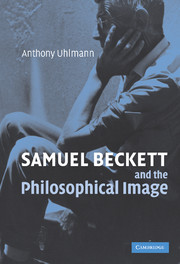
Samuel Beckett and the Philosophical Image

Parution livre

Information publiée le mardi 15 mai 2007 par Gabriel Marcoux-Chabot (source : Cambridge University Press website)


_blank

Anthony UHLMANN, Samuel Beckett and the Philosophical Image, Cambridge, Cambridge University Press, 2007, 198 p.
ISBN-13 9780521865203)


SUMMARY

Beckett often made use of images from the visual arts and readapted them, staging them in his plays, or using them in his fiction. Anthony Uhlmann sets out to explain how an image differs from other terms, like 'metaphor' or 'representation', and, in the process, to analyse Beckett's use of images borrowed from philosophy and aesthetics. This is the first study to carefully examine Beckett's thoughts on the image in his literary works and his extensive notes to the philosopher Arnold Geulincx. Uhlmann considers how images might allow one kind of interaction between philosophy and literature, and how Beckett makes use of images which are borrowed from, or drawn into dialogue with, philosophical images from Geulincx, Berkeley, Bergson, and the ancient Stoics. Uhlmann's reading of Beckett's aesthetic and philosophical interests provides a revolutionary new reading of the importance of the image in his work.


CONTENTS

Introduction

1. Representation and presentation: Deleuze, Bergson, Peirce and 'the image'

2. Beckett's aesthetic writings and 'the image'

3. Relation and nonrelation

4. The philosophical imaginary

5. Cogito Nescio

6. Beckett, Berkeley, Bergson, film: the intuition image

7. The ancient Stoics and the ontological image

Conclusion

Works cited.


Url de référence :
http://www.cambridge.org/us/catalogue/catalogue.asp?isbn=9780521865203


Derniers ouvrages parus :

Lexique nomade

A. Cousin de Ravel, Quignard, Maître de lecture. Lire, vivre, écrire

P. Engel, Les Lois de l'esprit. Julien Benda ou la raison

M. Crouzet, M. Myself ou La Vie de Stendhal (nouvelle version)

Laurence Brogniez (dir.), Écrits voyageurs. Les artistes et l'ailleurs

O. Biaggini, B. Milland-Bove (dir.), Miracles d'un autre genre  

Sévigné, Lettres de l'année 1671

A. Pope & J. Swift, Pensées sur différents sujets

H. Melville, Le Marchand de paratonnerres, suivi de La Véranda

Le Dit des Heiké

S. Kierkegaard, La Crise et une crise dans la vie d'une actrice

E. Maigret et M. Stefanelli (dir.), La Bande dessinée : une médiaculture

I. Raynauld, Lire et écrire un scénario - Le Scénario de film comme texte

J.-F. Bédia, Les Ecritures africaines face à la logique actuelle du comparatisme

Eusèbe de Césarée, Histoire ecclésiastique. Commentaire - Tome I : Études d'introduction

P. Engel, Les lois de l'esprit, Julien Benda ou la raison  

P. E. Fobah, Introduction à une poétique et une stylistique de la littérature africaine

M.-C. Alexandrine-Sinapah, Itinéraire d'un esclave-poète à Cuba - Juan Francisco Manzano (1797-1854) entre littérature et histoire

Cl. Launchbury, Music, Poetry, Propaganda. Constructing French Cultural Soundscapes at the BBC during the Second World War 

O. Rosenthal, Ils ne sont pour rien dans mes larmes

A. Alciato, Il libro degli Emblemi, secondo le edizioni del 1531 e del 1534

Marc Azéma, La Préhistoire du cinéma

J. Milly, Au seuil de l'image

I. Mons, Lou Andreas-Salomé. En toute liberté

N. Redouane, Lecture(s) de Rachid Mimouni

Fil d'informations RSS Fil d'information RSS   Fabula sur Facebook Fabula sur Facebook   Fabula sur Twitter Fabula sur Twitter