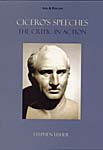
Stephen Usher, Cicero's Speeches: The Critic in Action, Oxford: Arris & Phillips (an imprint of Oxbow Books), 2008. vi-296 pages, 2008
Paperback. ISBN-13: 978-0-85668-874-4
Présentation de l'éditeur:
Cicero made a multiple bid for literary acclaim with his oratory and his writings on rhetoric, together with his works on politics, religion and philosophy. He was both orator and critic and his efficiency in preserving written versions of his speeches have left us with an abundance of material for the comparison of theory with practice. In this book Stephen Usher gives a detailed account of how Cicero viewed oratory, and what influenced the formation of his ideal. Cicero himself identifies eight desirable qualities and refinements that oratory should contain: literary knowledge and culture, knowledge and understanding of philosophy, knowledge of law, knowledge of history, wit and humour, emotional appeal, digression and dilatation. His assessment of both past and his contemporary orators exposes the intensity of the rivalry which underlies much of Cicero's rhetorical writing, and adds impetus to how he measures up to his own criteria. Usher sets each speech in its historical and forensic context, in chronological order, and examines to what extent and how successfully Cicero employs these definitions of great oratory.