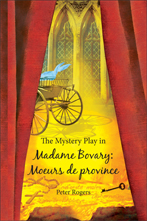
The Mystery Play in Madame Bovary: Moeurs de province
Peter Rogers
Amsterdam/New York, NY: Rodopi, coll. "Chiasma" n°26, 2009, 193 p.
- ISBN: 978-90-420-2706-0 Paper €39,-/US$57,-
- ISBN: 978-90-420-2707-7 E-Book €39,-/US$57,-
Présentation de l'éditeur:
Drawing upon Flaubert's fictional works, travel writings, correspondence, and notes on his reading of the Bible and interest in iconography, Rogers traces the presence of a liturgical drama, a mystery play, in a text known as iconic of the realist novel. Showing how Flaubert's use of religious tales, topoi, and imagery extends beyond his retelling of saints' lives in the Tentation de Saint Antoine and the Trois contes, this study elucidates the biblical and devotional subcurrent in the story of Emma Bovary. Biblical episodes, religious emblems, and discussions of Catholic dogma link the adulterous heroine to the Virgin Mary, who emerges in the course of this subtle reading as the other heroine of the scandalous story.
The 19th-century impulse to censor is embodied within the novel by two characters representing the secular and religious poles. The free-thinking pharmacist Homais and the parish priest concur only on the dangers of reading the Bible. When the novel itself was brought to trial for attacking religion, Flaubert's prosecutor and defense lawyer overlooked this condemnation of scripture. This study invites readers to pay close attention to the religious texts and traditions discussed and restaged in Madame Bovary to gain a new awareness of the narrow bond between theatre and religion in Flaubert's provinces.
Sommaire:
Acknowledgments
Dramatis personae
Introduction
Part One: The Lady of the Mystery
Virgin's threads
Scenes, modern and ancient
Solemnity and seduction
Part Two: Masters of the Place
Revealing names
Props for temptation
Honeymoon days
Part Three: The Sacerdotal Art of Healing
Incurable ineptitude personified
The Mystery of the Passion
The Wager
Selected Bibliography