Kirsten STIRLING
Bella Caledonia. Woman, Nation, Text.
Amsterdam/New York, NY: Rodopi, coll. "SCROLL:Scottish Cultural Review of Language and Literature" n° 11, 2008, 136 pp.
Isbn 13 (ean):978-90-420-2510-3
Présentation de l'éditeur
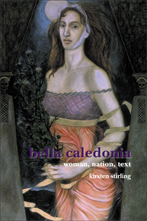
BellaCaledonia: Woman, Nation, Text looks at the widespread tradition of using afemale figure to represent the nation, focusing on twentieth-century Scottishliterature. The woman-as-nation figure emerged in Scotland in the twentieth century, but as aliterary figure rather than an institutional icon like Britannia or France's Marianne. Scottish writers makeuse of familiar aspects of the trope such as the protective mother nation andthe woman as fertile land, which are obviously problematic from a feministperspective. But darker implications, buried in the long history of the figure,rise to the surface in Scotland, such as woman/nation as victim,and woman/nation as deformed or monstrous. As a result of Scotland's unusual status as a nation withinthe larger entity of Great Britain, the literary figures underconsideration here are never simply incarnations of a confident and completenation nurturing her warrior sons. Rather, they reflect a more modern anxietyabout the concept of the nation, and embody a troubled and divided national identity.Kirsten Stirling traces the development of the twentieth-century Scotland-as-woman figure through readings of poetryand fiction by male and female writers including Hugh MacDiarmid, NaomiMitchison, Neil Gunn, Lewis Grassic Gibbon, Willa Muir, Alasdair Gray, A.L.Kennedy, Ellen Galford and Janice Galloway.
Table
Acknowledgements
Introduction:Engendering the Nation
ChapterOne: Woman as Nation
ChapterTwo: The Female Figure in the Scottish Renaissance
ChapterThree: The Female Nation as Victim
ChapterFour: The Monstrous Muse
ChapterFive: Women Writing Nation
Bibliography
Index
L'auteur
KirstenStirling teaches English literature at the University of Lausanne, Switzerland.She has a PhD from the University of Glasgow. Her two main areas of researchspecialization are twentieth-century Scottish literature and the poetry of JohnDonne.