Fabula, la recherche en littérature (actu)

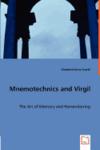
E.-A. Scarth, Mnemotechnics and Virgil: The Art of Memory and Remembering

Parution livre

Information publiée le mardi 30 décembre 2008 par Bérenger Boulay


_blank

Elizabeth-Anne Scarth, Mnemotechnics and Virgil: The Art of Memory and Remembering. Saarbrücken:  VDM Verlag Dr. Müller, 2008, v-109 p.

ISBN 13 (ean): 9783836476669

Recension par Giampiero Scafoglio (Università di Salern) dans Bryn Mawr Classical Review: 2008.12.40

Présentation de l'éditeur:

Cicero, Quintilian and the anonymous author of the ad Herennium each describe the art and practice of using an artificial memory system to help aid remembrance. Each of the authors' respective treatises offers an exploration of how both loci (places) and imagines (images) were used to facilitate remembrance of both res (things) and verba (words). The methods delineated by each author provide valuable insight into the visual process, used by educated Romans to retrieve and recall information stored in their memories. By understanding how remembering and recollection were inherently important to the Romans the modern reader can apprehend how Virgil, as a member of the Roman elite, either consciously or subconsciously, would portray his characters as being familiar not only with the system of artificial memory, but also with the Roman process of using different spaces and places to stimulate remembrance. This book looks at the rhetoricians' discussions of the art of memory and posits that Virgil uses the artificial memory system features of sequential order, discriminability, and distinctiveness when describes the way his characters look at various images in the Aeneid.


Derniers ouvrages parus :

O. Biaggini, B. Milland-Bove (dir.), Miracles d'un autre genre  

Sévigné, Lettres de l'année 1671

A. Pope & J. Swift, Pensées sur différents sujets

H. Melville, Le Marchand de paratonnerres, suivi de La Véranda

Le Dit des Heiké

S. Kierkegaard, La Crise et une crise dans la vie d'une actrice

E. Maigret et M. Stefanelli (dir.), La Bande dessinée : une médiaculture

I. Raynauld, Lire et écrire un scénario - Le Scénario de film comme texte

J.-F. Bédia, Les Ecritures africaines face à la logique actuelle du comparatisme

Eusèbe de Césarée, Histoire ecclésiastique. Commentaire - Tome I : Études d'introduction

P. Engel, Les lois de l'esprit, Julien Benda ou la raison  

P. E. Fobah, Introduction à une poétique et une stylistique de la littérature africaine

M.-C. Alexandrine-Sinapah, Itinéraire d'un esclave-poète à Cuba - Juan Francisco Manzano (1797-1854) entre littérature et histoire

Cl. Launchbury, Music, Poetry, Propaganda. Constructing French Cultural Soundscapes at the BBC during the Second World War 

O. Rosenthal, Ils ne sont pour rien dans mes larmes

A. Alciato, Il libro degli Emblemi, secondo le edizioni del 1531 e del 1534

Marc Azéma, La Préhistoire du cinéma

J. Milly, Au seuil de l'image

I. Mons, Lou Andreas-Salomé. En toute liberté

N. Redouane, Lecture(s) de Rachid Mimouni

Chr. Martin (dir.), Fictions de l'origine (1650-1800)

D. Brooks, The Sons of Clovis : Ern Malley, Adoré Floupette and a Secret History of Australian Poetry

Jean Richepin, Truandailles

C. Meyer-Plantureux, Romain Rolland - Théâtre et engagement

C. Aliberti, Du spasme existentiel à la quête de rédemption

Fil d'informations RSS Fil d'information RSS   Fabula sur Facebook Fabula sur Facebook   Fabula sur Twitter Fabula sur Twitter