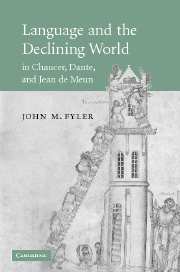
John M. FYLER, Language and the Declining World in Chaucer, Dante, and Jean de Meun, Cambridge, Cambridge University Press (Cambridge Studies in Medieval Literature), 2007, 380 p.
ISBN-13 9780521872157
RÉSUMÉ
Medieval commentaries on the origin and history of language usedbiblical history, from Creation to the Tower of Babel, as theirstarting/point, and described the progressive impairment of anoriginally perfect language. Biblical and classical sources raisedquestions for both medieval poets and commentators about the nature oflanguage, its participation in the Fall, and its possible redemption.John M. Fyler focuses on how three major poets – Chaucer, Dante, andJean de Meun – participated in these debates about language. He offersnew analyses of how the history of language is described and debated inthe Divine Comedy, the Canterbury Tales and the Roman de la Rose.While Dante follows the Augustinian idea of the fall and subsequentredemption of language, Jean de Meun and Chaucer are skeptical aboutthe possibilities for linguistic redemption and resign themselves, atleast half/comically, to the linguistic implications of the Fall andthe declining world.
TABLE DES MATIÈRES
Acknowledgments page
List of abbreviations
The Biblical history of language
Love and language in Jean de Meun
Dante and Chaucer’s Dante
The prison-house of language
Notes
Primary sources
Bibliography
Index
À PROPOS DE L'AUTEUR
John M. Fyler is Professor of English at Tufts University, Massachusetts.