Fabula, la recherche en littérature (actu)

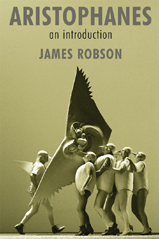
J. Robson, Aristophanes: an introduction

Parution livre

Information publiée le mardi 23 février 2010 par Frédérique Fleck


_blank

[Agrégation 2010]

James Robson, Aristophanes: an introduction. London: Duckworth, 2009. xi, 244 p.

  • $27.00 (pb).
  • ISBN 9780715634523 

Recension par Anna Peterson (Ohio State University) dans Bryn Mawr Classical Review 2010.08.67.

Présentation de l'éditeur:

This accessible introduction to the work of one of the world's greatest comic writers tackles key questions posed by Aristophanes' plays, such as staging, humour, songs, obscene language, politics and the modern translation and performance of Aristophanic comedy.

The book opens up exciting and contentious areas of Aristophanic scholarship in a way that is engaging and readily comprehensible to a non-specialist audience, never losing sight of the fact that Aristophanes' plays are vibrant literary texts, designed primarily to appeal to a classical Athenian audience as pieces of living drama. Key to the book's appeal is that James Robson conceives of the plays as dynamic texts, containing a treasure trove of information not only about how they might have been performed and received in classical Athens, but also how they might be read and understood today. Most importantly, readers are given the tools and information to make their own minds up about the debates that still rage about Aristophanic comedy in the modern world.

James Robson is Senior Lecturer in Classical Studies at the Open University, and the author of Humour, Obscenity and Aristophanes (2006).

Table des matières:

1. Aristophanes and Old Comedy 1
2. Putting on a Show 13
3. Setting the Scene: Theatre Space and Costumes 30
4. Aristophanes the Humorist 48
5. The People of Aristophanes 77
6. Tragic Fragments 103
7. Talking Dirty: Aristophanic Obscenity 120
8. Waxing Lyrical: Aristophanes the Songwriter 141
9. Getting the Message: Aristophanic Politics 162
10. Aristophanes in the Modern World: Translation and Performance 188


Url de référence :
http://www.ducknet.co.uk/academic/title.php?titleissue_id=943


Derniers ouvrages parus :

Théodore Augustin Mann, Mémoires sur les grandes gelées et leurs effets

L. Hébert & L. Guillemette (dir.), Performances et objets culturels. Nouvelles perspectives

R. Corona, Mots de l'enfermement - Clôtures et silences : lexique et rhétorique de la douleur du néant

J. Hillion, Shakespeare et son double - Les Sonnets de Shakespeare à la lumière de la théorie mimétique de René Girard

Alison Boulanger et Jessica Wilker, (éd.), La posture de l'herméneute. Essais sur l'interprétation dans la littérature

Nadia R. Altschul : Geographies of Philological Knowledge. Postcoloniality and the Transatlantic National Epic

A. Matei, Jean Echenoz et la distance intérieure

P. Citti, Taine, philosophe du récit

F. Parisot (dir.), Alejo Carpentier à l'aube du XXIème siècle

Chr. Chaulet Achour (dir.), À l'aube des Mille et Une Nuits. Lectures comparatistes

M. Méricam-Bourdet, Voltaire et l’écriture de l’histoire: un enjeu politique

J.-P. Cléro, E. Faye (dir.), Descartes, des principes aux phénomènes

D. Bellos, Le Poisson et le bananier. L'histoire fabuleuse de la traduction

J. Rancière, La Leçon d'Althusser

E. Zola, Mes haines (GF-Flammarion)

E. Zola, Correspondance (GF-Flammarion)

J. Caradonna, The Enlightenment in Practice: Academic Prize Contests and Intellectual Culture in France, 1670–1794

R. Le Menthéour, La Manufacture de maladies. La dissidence hygiénique de J.-J. Rousseau

C. Hammann, Déplaire au public : le cas Rousseau

A. Biancofiore, Pasolini - Devenir d'une création

N. Sabri, La Kahéna - Un mythe à l'image du Maghreb

N. Aubert, Christian Dotremont. La Conquête du monde par l'image

R. Faure et  C. Cusset, Silves grecques 2012-2013 : Apollonios de Rhodes, Argonautiques III ; Xénophon, le Banquet et Apologie de Socrate

B. Joly, Descartes et la chimie

A. Dominguez Leiva, S Hubier, F. Toudoire-Surlarpierre, Le comparatisme, un univers en 3D?

Fil d'informations RSS Fil d'information RSS   Fabula sur Facebook Fabula sur Facebook   Fabula sur Twitter Fabula sur Twitter