Fabula, la recherche en littérature (actu)

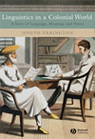
J. Errington, Linguistics in a Colonial World

Parution livre avec compte rendu à paraître prochainement dans Acta

Information publiée le samedi 1 décembre 2007 par Camille Esmein


_blank

Joseph Errington (Yale University)

Linguistics in a Colonial World A Story of Language, Meaning, and Power

Blackwell Publishing, 2007.

Description

Drawing on both original texts and critical literature, Linguistics in a Colonial World surveys the methods, meanings, and uses of early linguistic projects around the world.

Explores how early endeavours in linguistics were used to aid in overcoming practical and ideological difficulties faced in colonial rule

Traces the uses and effects of colonial linguistic projects in shaping the identities and communities that were under, or in opposition to, imperial regimes

Examines how the linguistic face of colonial scholarship's history continues to shape the thinking about language and cultural difference today Brings new insight into post-colonial controversies including endangered languages and language rights in the globalized twenty-first century

Preface
Acknowledgments
List of Figures and Table
1. The Linguistic in the Colonial
2. Early Conversions, or, How Spanish Friars Made the Little Jump
3. Imaging the Linguistic Past
4. Philology's Evolutions
5. Between Pentecost and Pidgins
6. Colonial Linguists, (Proto)-National Languages
7. Postcolonial Postscript
References
Language Index
Persons Index
Subject Index Joseph Errington is currently Professor of Anthropology and International and Area Studies, as well as Chair of the Council of Southeast Asian Studies, at Yale University. His research and writing have focused on linguistic dimensions of modernization and identity in Java and Indonesia, reflecting his broader interests in semiotics and the politics of language.


Derniers ouvrages parus :

Lexique nomade

A. Cousin de Ravel, Quignard, Maître de lecture. Lire, vivre, écrire

P. Engel, Les Lois de l'esprit. Julien Benda ou la raison

M. Crouzet, M. Myself ou La Vie de Stendhal (nouvelle version)

Laurence Brogniez (dir.), Écrits voyageurs. Les artistes et l'ailleurs

O. Biaggini, B. Milland-Bove (dir.), Miracles d'un autre genre  

Sévigné, Lettres de l'année 1671

A. Pope & J. Swift, Pensées sur différents sujets

H. Melville, Le Marchand de paratonnerres, suivi de La Véranda

Le Dit des Heiké

S. Kierkegaard, La Crise et une crise dans la vie d'une actrice

E. Maigret et M. Stefanelli (dir.), La Bande dessinée : une médiaculture

I. Raynauld, Lire et écrire un scénario - Le Scénario de film comme texte

J.-F. Bédia, Les Ecritures africaines face à la logique actuelle du comparatisme

Eusèbe de Césarée, Histoire ecclésiastique. Commentaire - Tome I : Études d'introduction

P. Engel, Les lois de l'esprit, Julien Benda ou la raison  

P. E. Fobah, Introduction à une poétique et une stylistique de la littérature africaine

M.-C. Alexandrine-Sinapah, Itinéraire d'un esclave-poète à Cuba - Juan Francisco Manzano (1797-1854) entre littérature et histoire

Cl. Launchbury, Music, Poetry, Propaganda. Constructing French Cultural Soundscapes at the BBC during the Second World War 

O. Rosenthal, Ils ne sont pour rien dans mes larmes

A. Alciato, Il libro degli Emblemi, secondo le edizioni del 1531 e del 1534

Marc Azéma, La Préhistoire du cinéma

J. Milly, Au seuil de l'image

I. Mons, Lou Andreas-Salomé. En toute liberté

N. Redouane, Lecture(s) de Rachid Mimouni

Fil d'informations RSS Fil d'information RSS   Fabula sur Facebook Fabula sur Facebook   Fabula sur Twitter Fabula sur Twitter