Fabula, la recherche en littérature (actu)

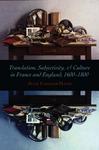
J. C. Hayes, Translation, Subjectivity, and Culture in France and England, 1600-1800

Parution livre

Information publiée le samedi 18 avril 2009 par Gabriel Marcoux-Chabot (source : Site web de la maison d'édition)


_blank

HAYES, Julie Candler, Translation, Subjectivity, and Culture in France and England, 1600-1800, Palo Alto, Stanford University Press, 2009, 336 p.

ISBN 9780804759441

RÉSUMÉ

Translation, Subjectivity, and Culture examines the evolution of neoclassical translation theory from its origins among the first generation of French Academicians to its subsequent importation to England by royalist exiles, its development under the influence of such translator-critics as John Dryden and Anne Dacier, and its evolution in response to the philosophical and political ideas of the Enlightenment. Hayes shows how translators working from a range of literary, political, and philosophical viewpoints speak to such issues as the relationship of past to present, authorship and the status of women writers, the role of language in national identity, and Anglo-French intellectual exchange. Responding to recent translation historians who describe neoclassical translation as ethnocentric, she uncovers within these translators' projects not only openness to cultural others but constant and multiple reformulations of the very concept of otherness. Her book is a sustained reflection on the aims and methods of contemporary translation studies and the most complete account available of the role of translation during a critical period in European history.

BIOGRAPHIE

Julie Candler Hayes is Professor of French and Comparative Literature and Chair of the Department of Languages, Literatures, and Cultures at the University of Massachusetts Amherst. She is the author of Reading the French Enlightenment: System and Subversion (1999).


Responsable : Julie Candler Hayes

Url de référence :
http://www.sup.org/book.cgi?id=16199


Derniers ouvrages parus :

Lexique nomade

A. Cousin de Ravel, Quignard, Maître de lecture. Lire, vivre, écrire

P. Engel, Les Lois de l'esprit. Julien Benda ou la raison

M. Crouzet, M. Myself ou La Vie de Stendhal (nouvelle version)

Laurence Brogniez (dir.), Écrits voyageurs. Les artistes et l'ailleurs

O. Biaggini, B. Milland-Bove (dir.), Miracles d'un autre genre  

Sévigné, Lettres de l'année 1671

A. Pope & J. Swift, Pensées sur différents sujets

H. Melville, Le Marchand de paratonnerres, suivi de La Véranda

Le Dit des Heiké

S. Kierkegaard, La Crise et une crise dans la vie d'une actrice

E. Maigret et M. Stefanelli (dir.), La Bande dessinée : une médiaculture

I. Raynauld, Lire et écrire un scénario - Le Scénario de film comme texte

J.-F. Bédia, Les Ecritures africaines face à la logique actuelle du comparatisme

Eusèbe de Césarée, Histoire ecclésiastique. Commentaire - Tome I : Études d'introduction

P. Engel, Les lois de l'esprit, Julien Benda ou la raison  

P. E. Fobah, Introduction à une poétique et une stylistique de la littérature africaine

M.-C. Alexandrine-Sinapah, Itinéraire d'un esclave-poète à Cuba - Juan Francisco Manzano (1797-1854) entre littérature et histoire

Cl. Launchbury, Music, Poetry, Propaganda. Constructing French Cultural Soundscapes at the BBC during the Second World War 

O. Rosenthal, Ils ne sont pour rien dans mes larmes

A. Alciato, Il libro degli Emblemi, secondo le edizioni del 1531 e del 1534

Marc Azéma, La Préhistoire du cinéma

J. Milly, Au seuil de l'image

I. Mons, Lou Andreas-Salomé. En toute liberté

N. Redouane, Lecture(s) de Rachid Mimouni

Fil d'informations RSS Fil d'information RSS   Fabula sur Facebook Fabula sur Facebook   Fabula sur Twitter Fabula sur Twitter