Fabula, la recherche en littérature (actu)

Film Adaptation and Its Discontents

Parution livre

Information publiée le vendredi 18 mai 2007 par Gabriel Marcoux-Chabot (source : Johns Hopkins University Press website)


_blank

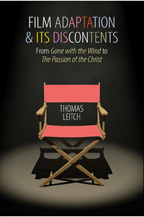
Thomas LEITCH, Film Adaptation and Its Discontents. From Gone with the Wind to The Passion of the Christ, Baltimore, Johns Hopkins University Press, 2007, 368 p.
ISBN 978-0-8018-8565-5


SUMMARY

Most books on film adaptation—the relation between films and their literary sources—focus on a series of close one-to-one comparisons between specific films and canonical novels. This volume identifies and investigates a far wider array of problems posed by the process of adaptation. Beginning with an examination of why adaptation study has so often supported the institution of literature rather than fostering the practice of literacy, Thomas Leitch considers how the creators of short silent films attempted to give them the weight of literature, what sorts of fidelity are possible in an adaptation of sacred scripture, what it means for an adaptation to pose as an introduction to, rather than a transcription of, a literary classic, and why and how some films have sought impossibly close fidelity to their sources. After examining the surprisingly divergent fidelity claims made by three different kinds of canonical adaptations, Leitch's analysis moves beyond literary sources to consider why a small number of adapters have risen to the status of auteurs and how illustrated books, comic strips, video games, and true stories have been adapted to the screen. The range of films studied, from silent Shakespeare to Sherlock Holmes to The Lord of the Rings, is as broad as the problems that come under review.
ABOUT THE AUTHOR

Thomas Leitch is a professor of English at the University of Delaware.


Url de référence :
http://www.press.jhu.edu/books/title_pages/9310.html


Derniers ouvrages parus :

Lexique nomade

A. Cousin de Ravel, Quignard, Maître de lecture. Lire, vivre, écrire

P. Engel, Les Lois de l'esprit. Julien Benda ou la raison

Laurence Brogniez (dir.), Écrits voyageurs. Les artistes et l'ailleurs

O. Biaggini, B. Milland-Bove (dir.), Miracles d'un autre genre  

Sévigné, Lettres de l'année 1671

A. Pope & J. Swift, Pensées sur différents sujets

H. Melville, Le Marchand de paratonnerres, suivi de La Véranda

Le Dit des Heiké

S. Kierkegaard, La Crise et une crise dans la vie d'une actrice

E. Maigret et M. Stefanelli (dir.), La Bande dessinée : une médiaculture

I. Raynauld, Lire et écrire un scénario - Le Scénario de film comme texte

J.-F. Bédia, Les Ecritures africaines face à la logique actuelle du comparatisme

Eusèbe de Césarée, Histoire ecclésiastique. Commentaire - Tome I : Études d'introduction

P. Engel, Les lois de l'esprit, Julien Benda ou la raison  

P. E. Fobah, Introduction à une poétique et une stylistique de la littérature africaine

M.-C. Alexandrine-Sinapah, Itinéraire d'un esclave-poète à Cuba - Juan Francisco Manzano (1797-1854) entre littérature et histoire

Cl. Launchbury, Music, Poetry, Propaganda. Constructing French Cultural Soundscapes at the BBC during the Second World War 

O. Rosenthal, Ils ne sont pour rien dans mes larmes

A. Alciato, Il libro degli Emblemi, secondo le edizioni del 1531 e del 1534

Marc Azéma, La Préhistoire du cinéma

J. Milly, Au seuil de l'image

I. Mons, Lou Andreas-Salomé. En toute liberté

N. Redouane, Lecture(s) de Rachid Mimouni

Chr. Martin (dir.), Fictions de l'origine (1650-1800)

Fil d'informations RSS Fil d'information RSS   Fabula sur Facebook Fabula sur Facebook   Fabula sur Twitter Fabula sur Twitter