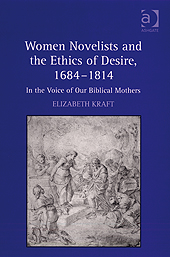
Elizabeth Kraft, WomenNovelists and the Ethics of Desire, 1684–1814 Inthe Voice of Our Biblical Mothers
Ahsgate, coll. "LiteraryStudies", 2008
Isbn (ean13): 978-0-7546-6280-8
Présentation de l'éditeur:
In Women Novelists and the Ethics ofDesire, 1684–1814, Elizabeth Kraft radically alters our conventional views ofearly women novelists by taking seriously their representations of femaledesire. To this end, she reads the fiction of Aphra Behn, Delarivier Manley,Eliza Haywood, Sarah Fielding, Charlotte Smith, Frances Burney, and ElizabethInchbald in light of ethical paradigms drawn from biblical texts about womenand desire. Like their paradigmatic foremothers, these early women novelistscreate female characters who demonstrate subjectivity and responsibility forthe other even as they grapple with the exigencies imposed on them bycircumstance and convention. Kraft's study, informed by ethical theorists suchas Emmanuel Levinas and Luce Irigaray, is remarkable in its juxtaposition of
narratives from ancient and early modern times. These pairings enable Kraft todemonstrate not only the centrality of female desire in eighteenth-centuryculture and literature but its ethical importance as well.
Tablesdes matières:
Introduction:in the voice of awoman; Matriarchal desire and ethical relation; Men and women in the garden ofdelight; Sexual awakening and political power; Hieroglyphics of desire; Hissister's song; The forgotten woman; The Lot motif and the redaction of doubledesire; Conclusion: the last word; Works cited; Index. L'auteur Elizabeth Kraft is Professor ofEnglish at the University of Georgia, USA. *